





The Man of Cachaça
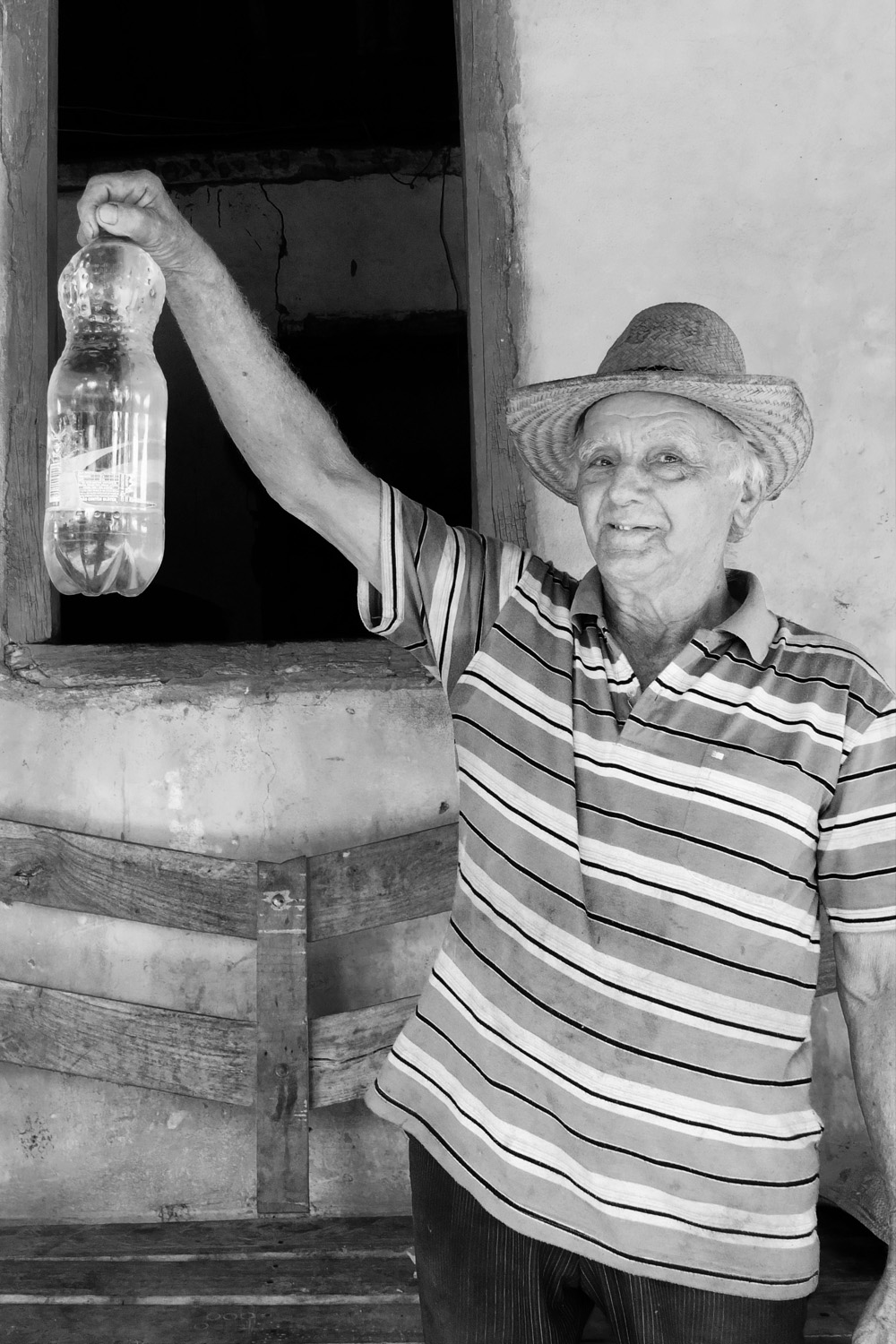
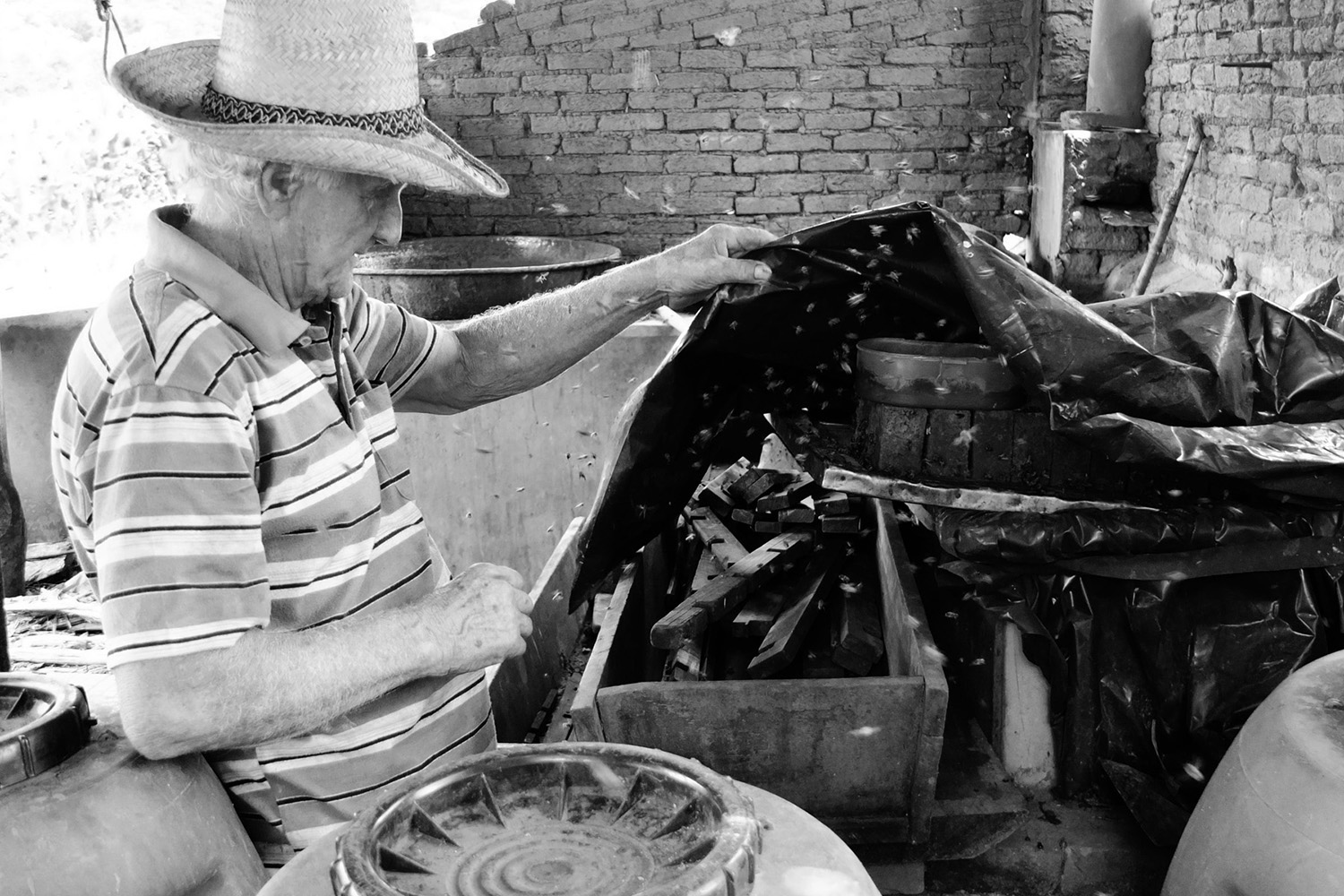
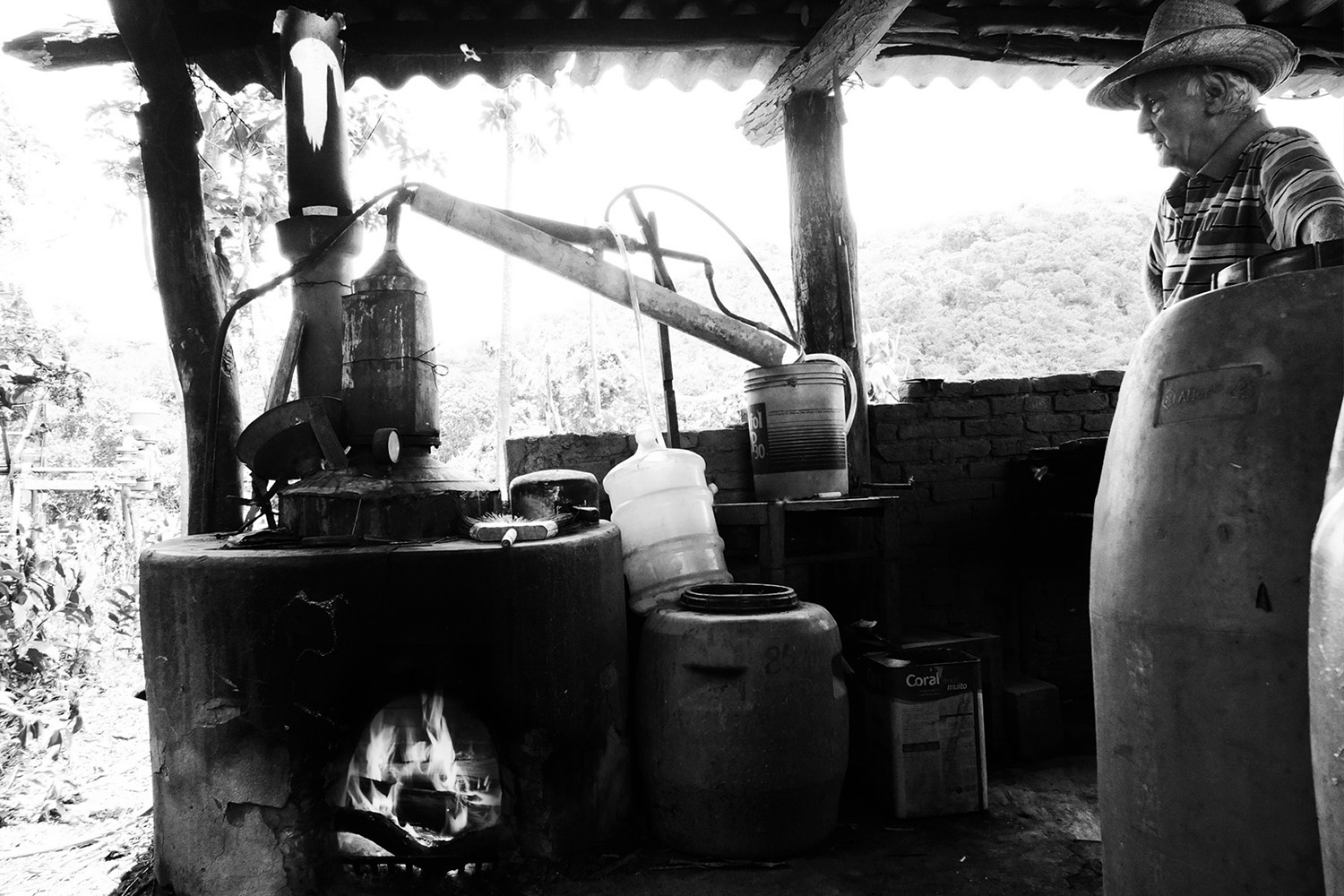
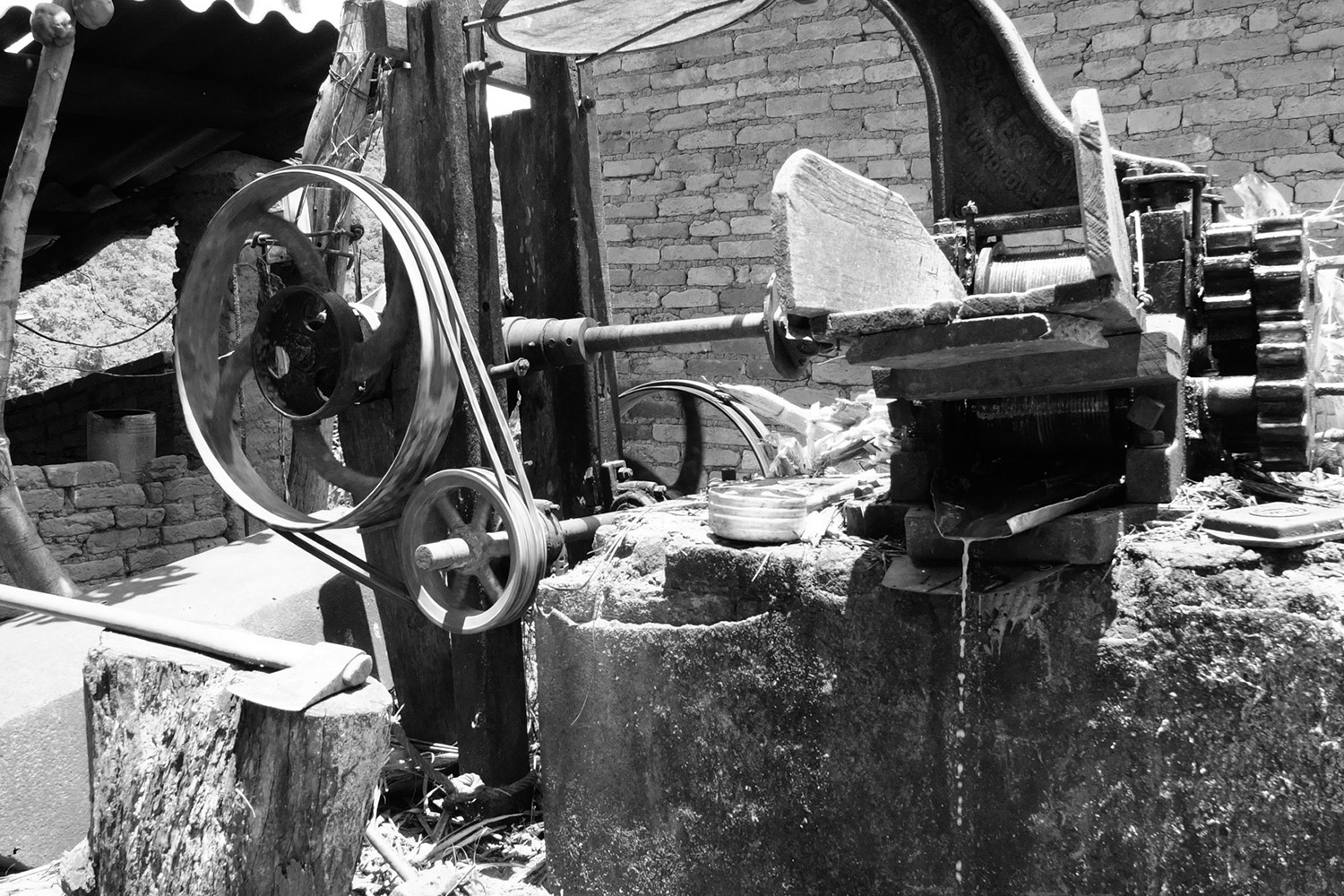
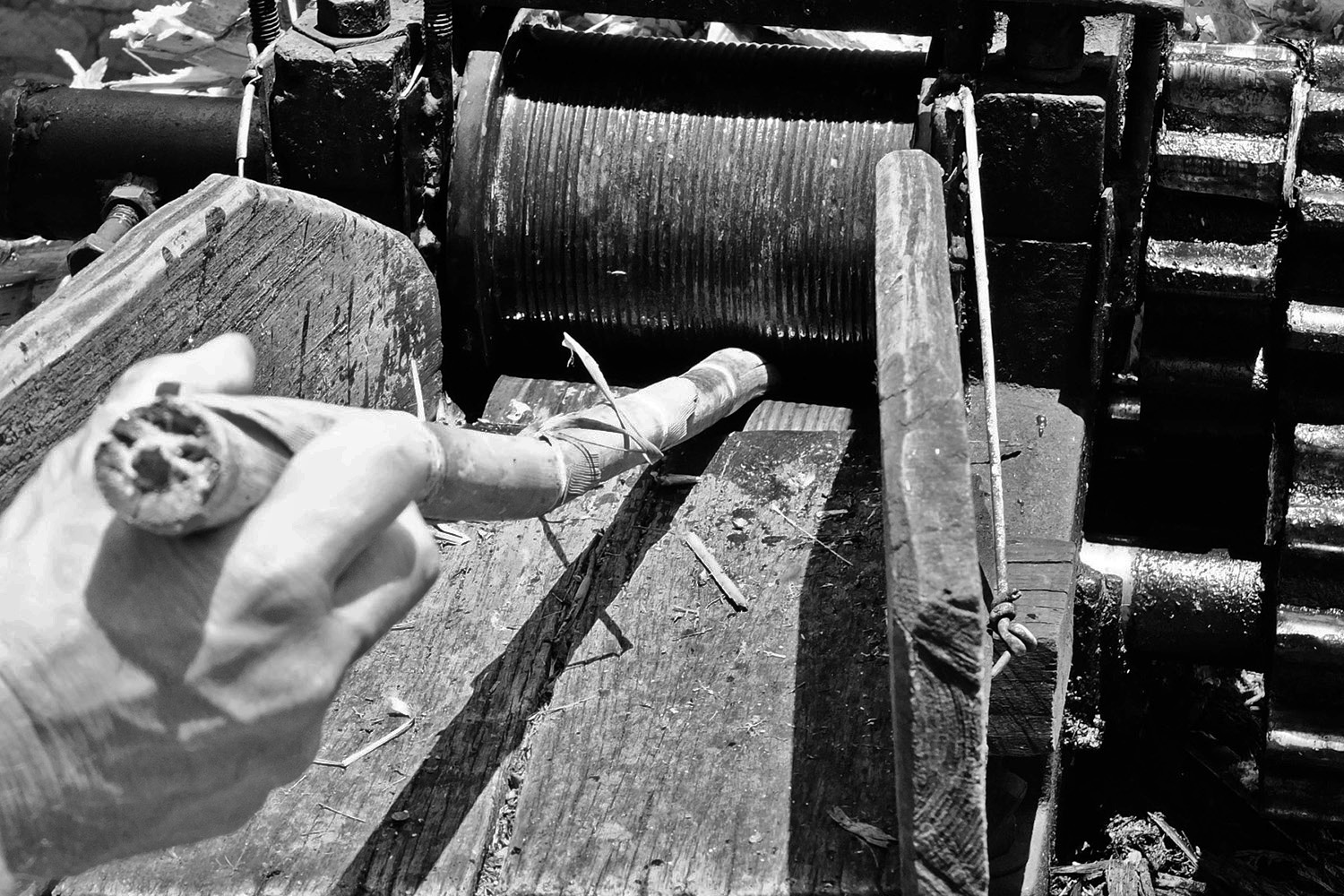
Cachaça is the name given to the alcohol of sugar cane, a typically Brazilian drink. Its name may have originated from the old Iberian word cachaza, the wine of the poor, drunk in Portugal and Spain. In the colonial production of cane sugar, the juice of the sugar cane was boiled and the first foam that rose to the surface was given to the animals or discarded, the second was consumed by slaves, and the product after fermentation was called cachaça. Cachaça is distilled from the fermented juice of sugar cane; the fermentation of molasses also gives rise to rum. In Brazil it is known by a multitude of different names, but the most used is Pinga, and it boasts a record production in the country, second only to that of beer. I had the pleasure of meeting Don Quioti, alias The Man of Cachaça, an 82-year-old farmer who produces sugar cane, strictly organic. This man lives alone on a farm just outside Ilicínea, in the state of Minas Gerais, in a big house surrounded by a huge plot where he takes care of everything and cultivates sugar cane, from which he creates a pure Cachaça of the highest alcohol content, a natural bomb. In the time I spent in his house, he proudly showed me all the machines that help him in his work, built with his own hands: from the car-tractor for the countryside, made from the frame of a Volkswagen Beetle (in Brazil, fusca), to the coffee-cleaning machine that uses the force of the stream, and the extractor of sugar cane juice, the raw material to produce Rapadura (unrefined sugar) and Cachaça, and the kitchen where it is cooked and distilled. In this man I saw genius and simplicity, all surrounded by a unique kindness. He opened the doors of his house without even knowing me and in the end we toasted to him, obviously with his Cachaça.